.png?width=585&height=400&name=Property%201=bleu%202%20(original).png)
Planet-score rating system
Planet-score is an environmental rating system based on scientific databases and studies covering climate, biodiversity, toxicology, and resources.
It integrates the environmental impact from farm to fork, including ingredients, their origin, cultivation or rearing methods, packaging, and transportation. Planet-score addresses all relevant issues openly and rigorously, without taboos or greenwashing, and with a high standard of requirements.
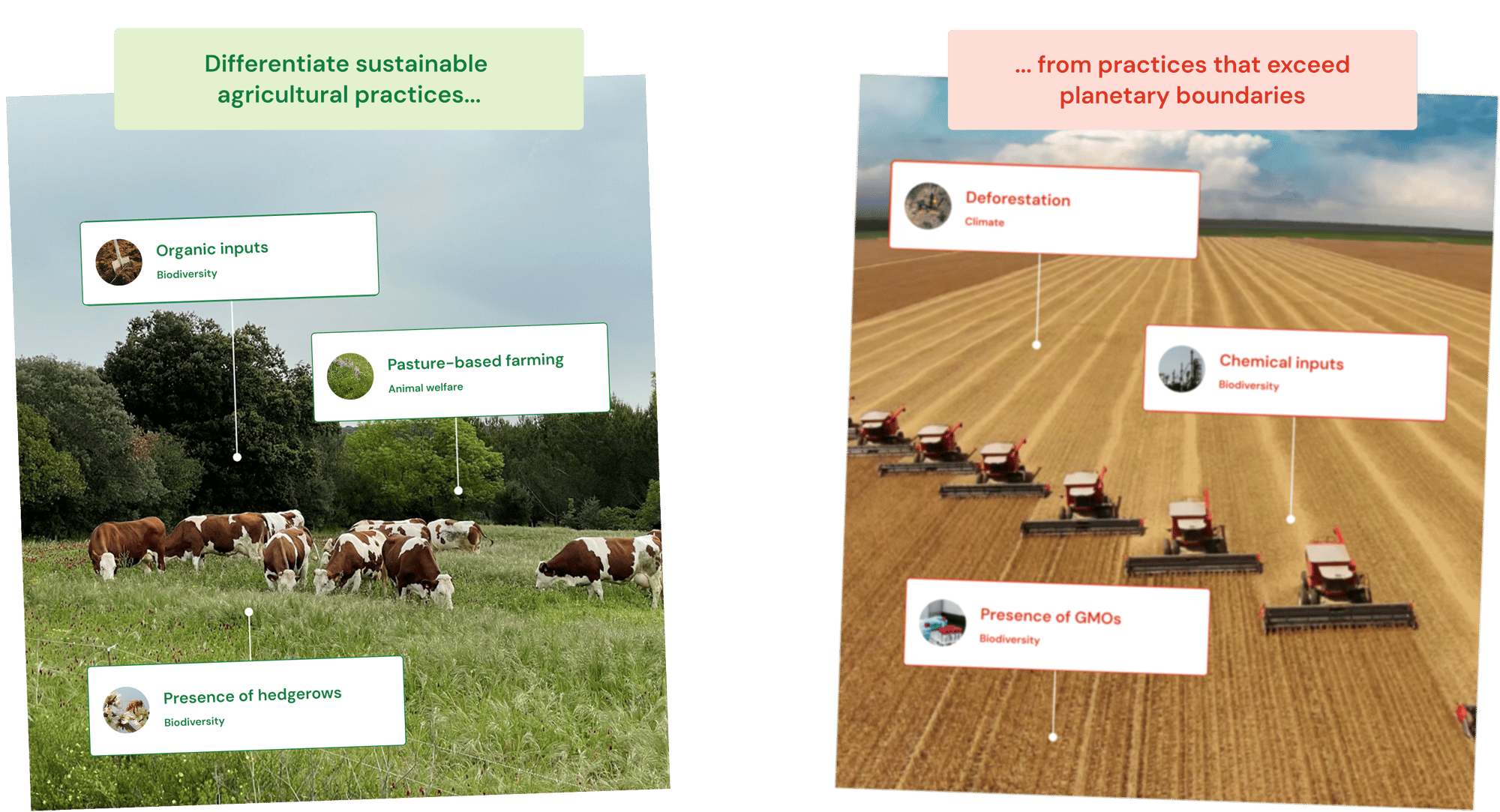
Agriculture is the primary cause of planetary boundaries overshoot
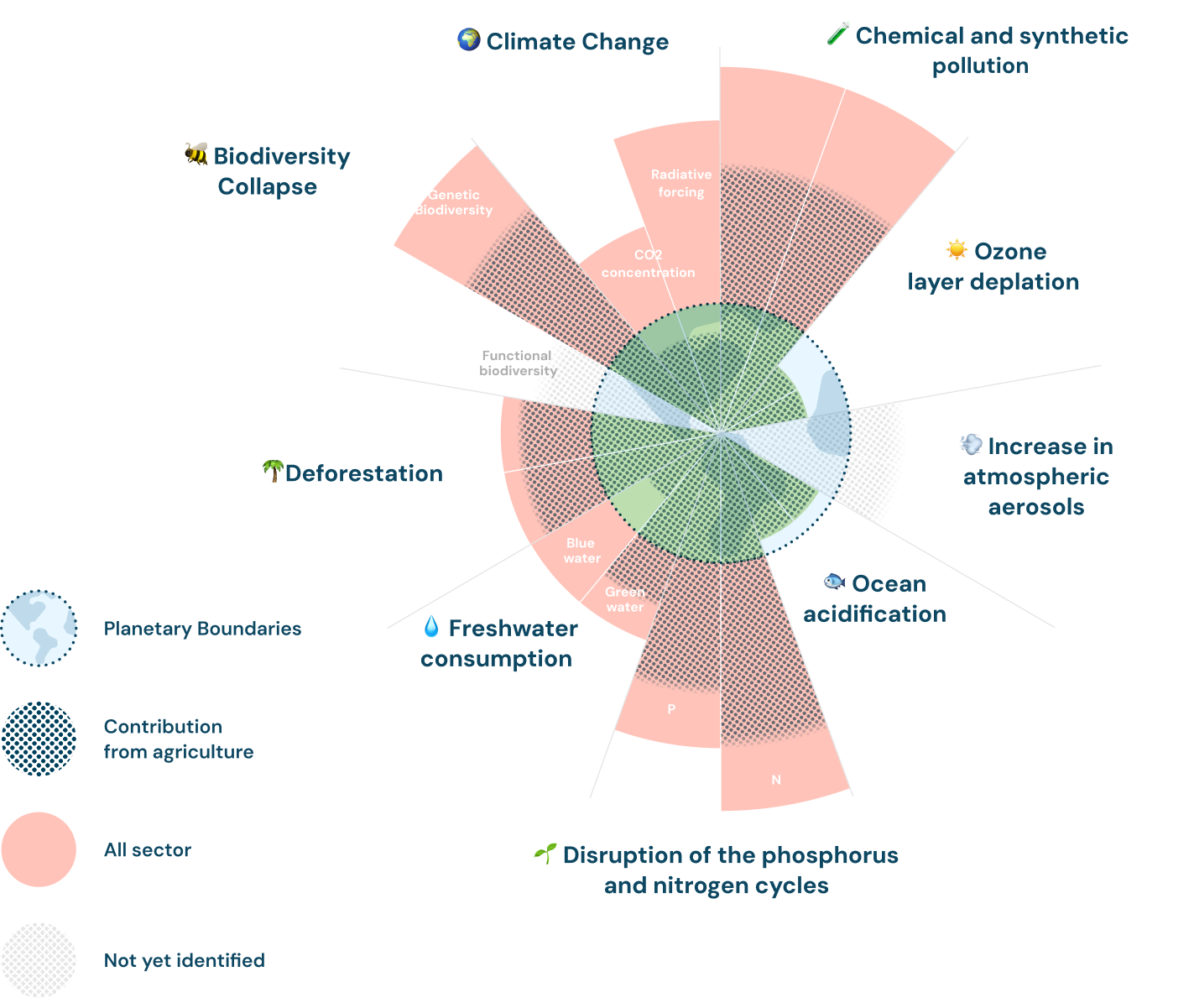
The agri-food system is both a major driver and a primary victim of pressures overshooting planetary boundaries.
Planet-score reflects a credible scenario for the ecological transition of our eating habits, calibrated by experts in agronomy and environmental sciences. It aligns with prospective European-scale scenarios, which demonstrate that a sustainable food supply is not only desirable but also achievable.
Planet-score supports this ecological transition in food and agriculture. It transparently highlights the key environmental impacts of food, primarily stemming from agricultural production, but also from transport, packaging, processing, and other related stages.
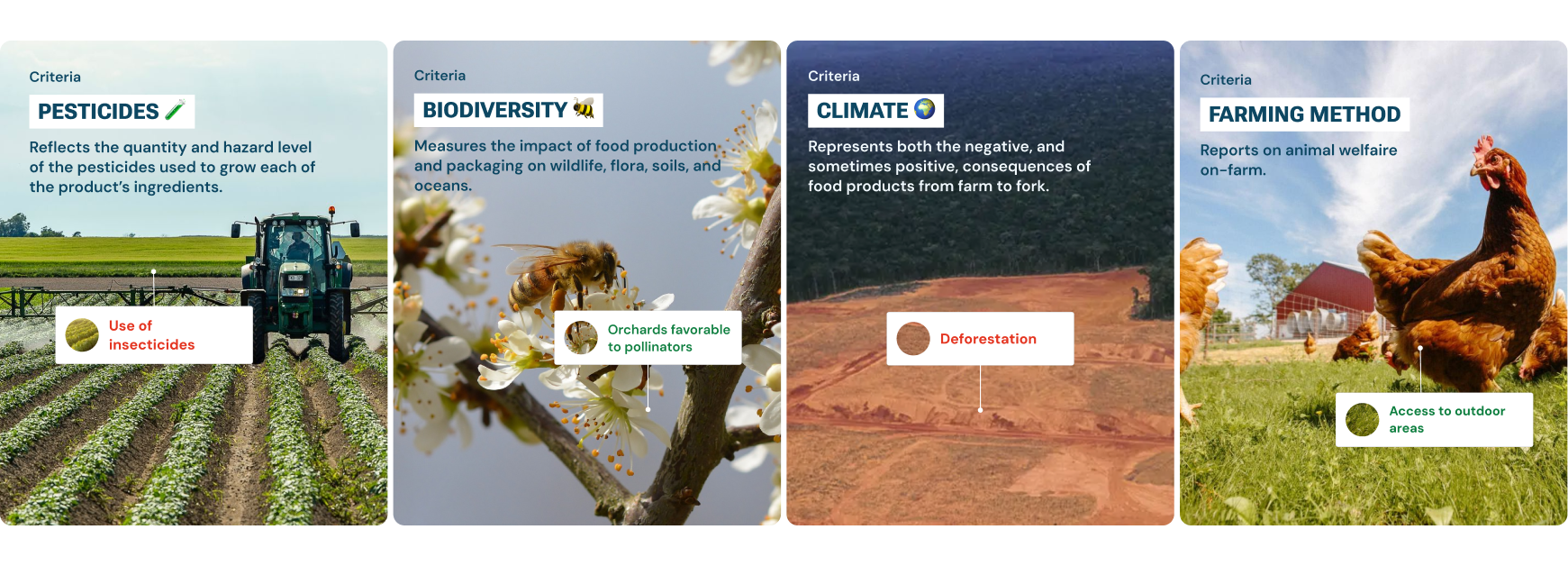
Planet-score translates issues into assessment criteria to take into account consequences of food production
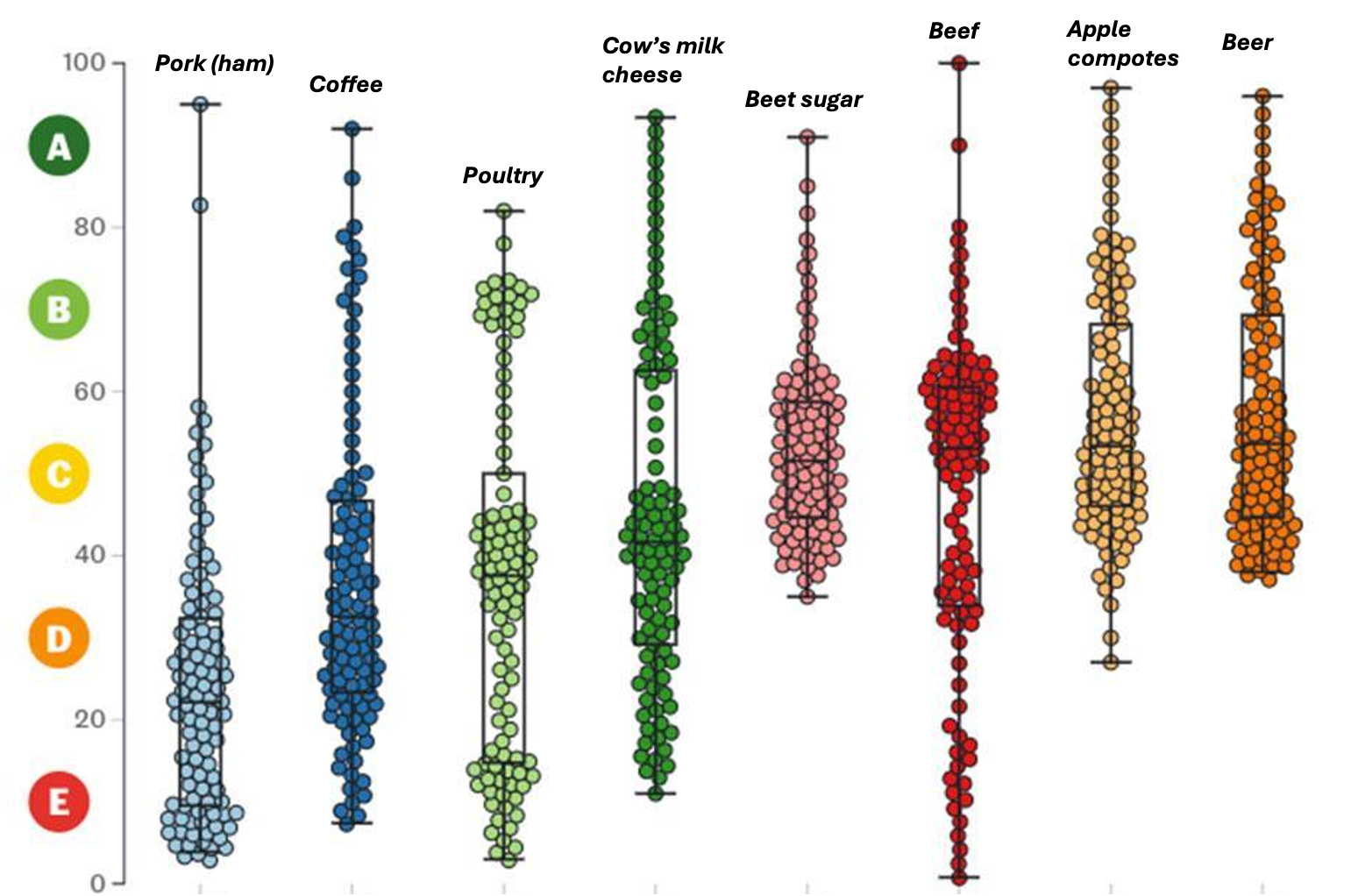
Planet-score results help differentiate products both within and across categories
- Cross-category differentiation helps to clarify the environmental impact of each type of food.
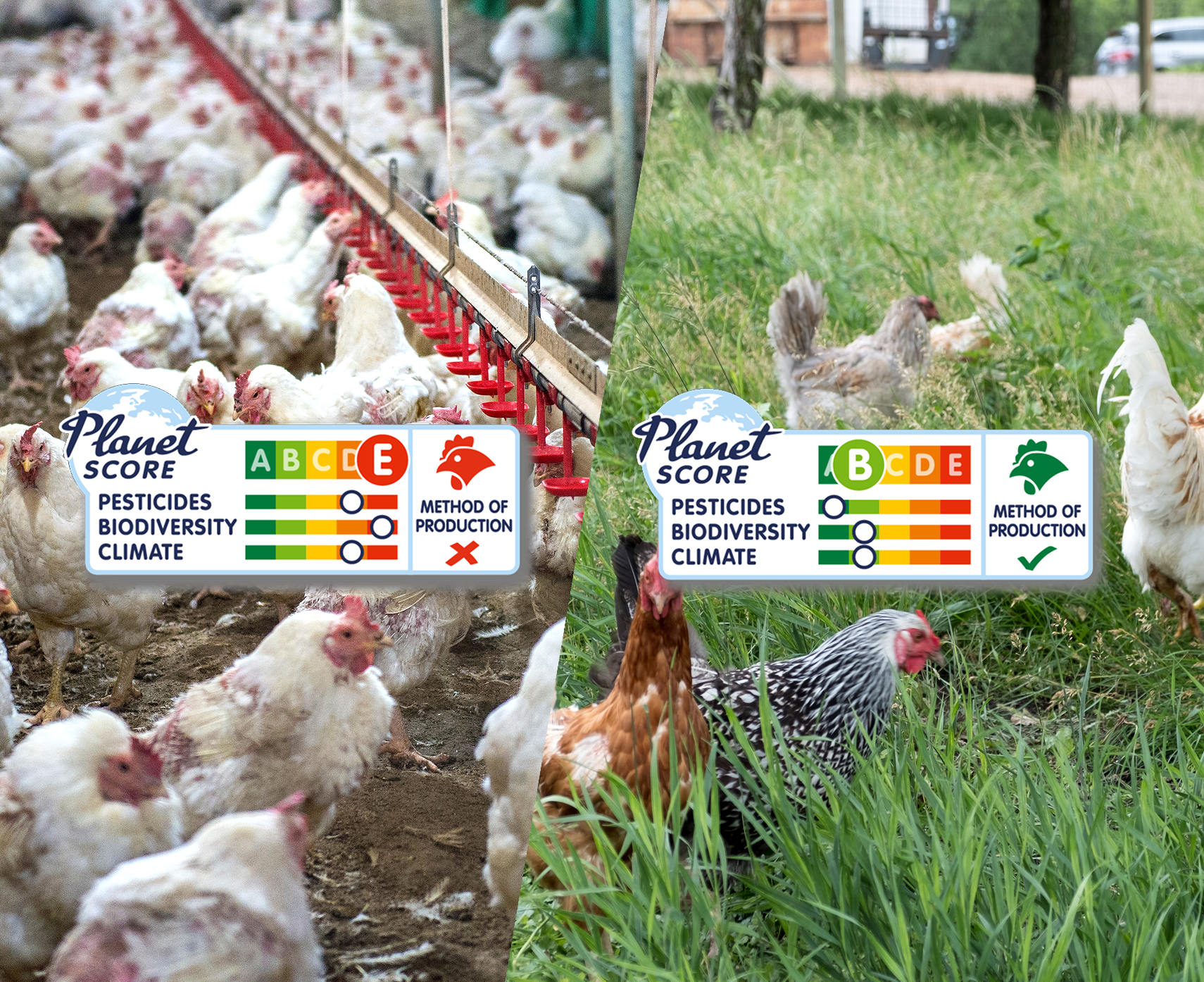
- Within the same product category, differentiation is taken further by comparing production methods.
Here is one example of a very popular product : chicken
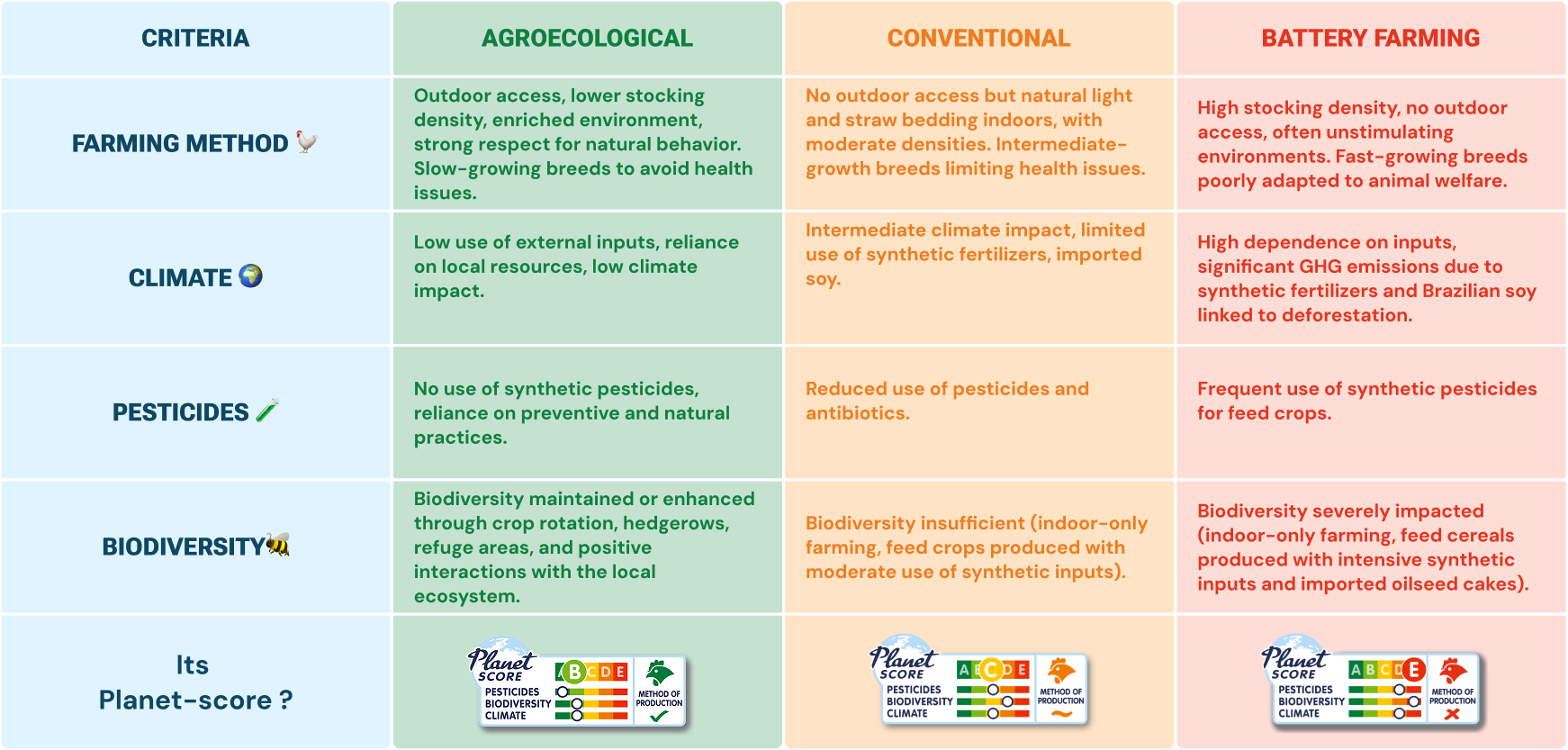
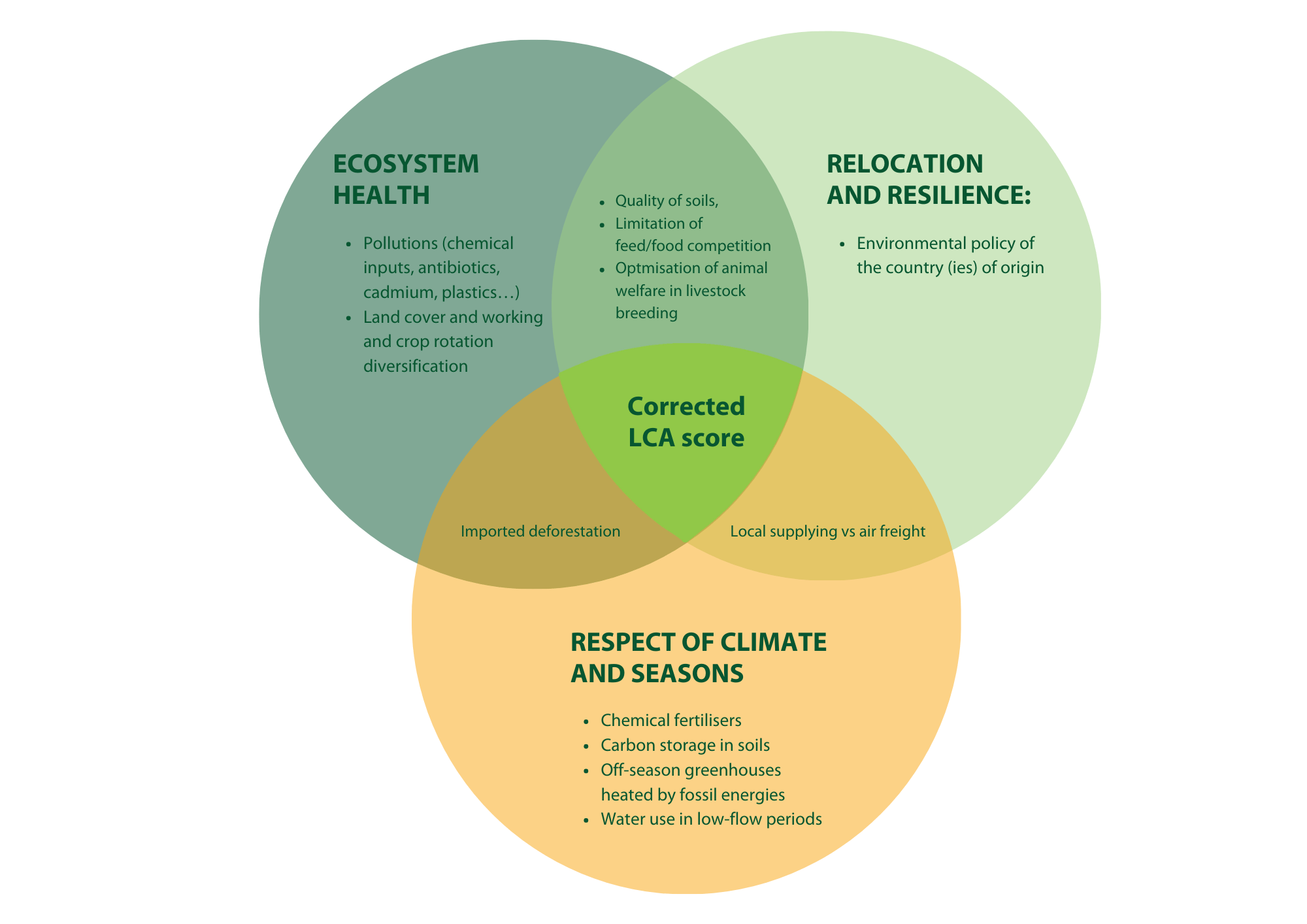
A scientific and transparent scoring method, that goes beyond Carbon Accounting
Carbon accounting is all the rage but it poses three problems.
- As a consumer you need to be able to value farming systems within the same category – carrot versus carrot. This will help you choose the best carrot. LCA methodologies will not give you results with this type of precision.
- Second, there are serious problems in the LCA methodologies and parameters used to evaluate carbon footprint in living or renewable systems, such as textiles and food.
- Third and most important is the problem of carbon tunnel vision: looking at carbon only, independently of other key environmental concerns, can lead to outcomes that are NOT better for the environment. This can be detrimental to biodiversity, for example.