Skip to content

Planet-score, a clear and reliable eco-labelling scheme for food products

Planet-score rates food products according to the most important environmental criteria.  It helps brands and companies improve their recipes and sourcing and helps consumers make better choices between different food products. The assessment is calculated using a scientific scoring system based on verified metrics and data, from farm to fork.

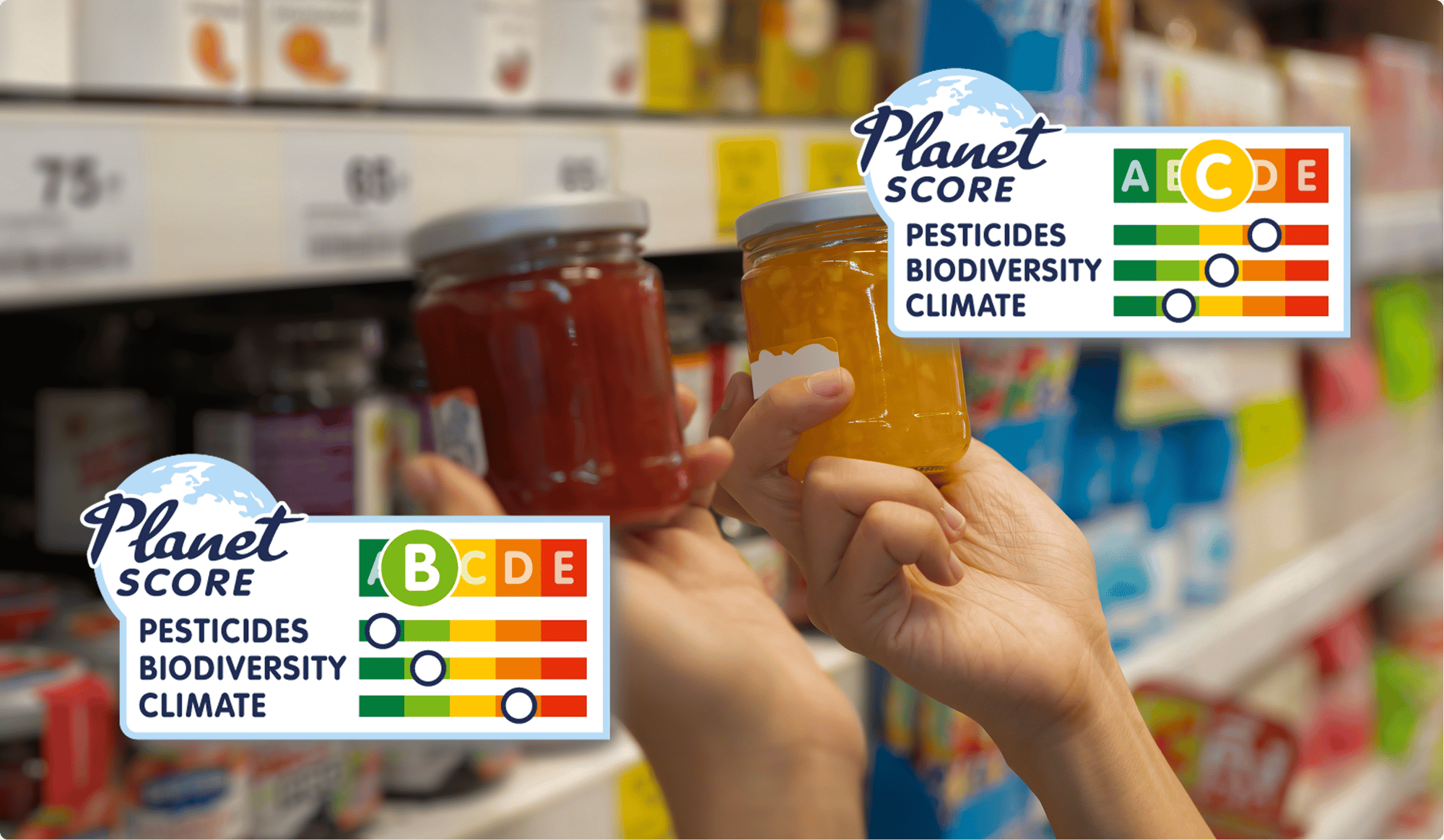
Planet-score environmental impact rating for food products

A 100% independent system

A scoring system created by scientists and NGOs

Independent researchers, scientists and experts from the food and agricultural sector, supported by food NGO’s, developed the Planet-score evaluation system. 

No industry ties and no public funding: Planet-score operates with full independence.
Independant control and governance

Everyone agrees that food and agriculture have a massive planetary impact.  The problem is food companies and brands have vested interests and existing business to protect.  This does not lead to an objective approach.  Eco-labelling needs to be both robust and impartial. 

That’s’ why Planet-score is owned and governed by a not-for profit foundation - Solid Grounds Institute - and there are no commercial interests involved in its governance.

The Leading Label for Transparency on Food Products

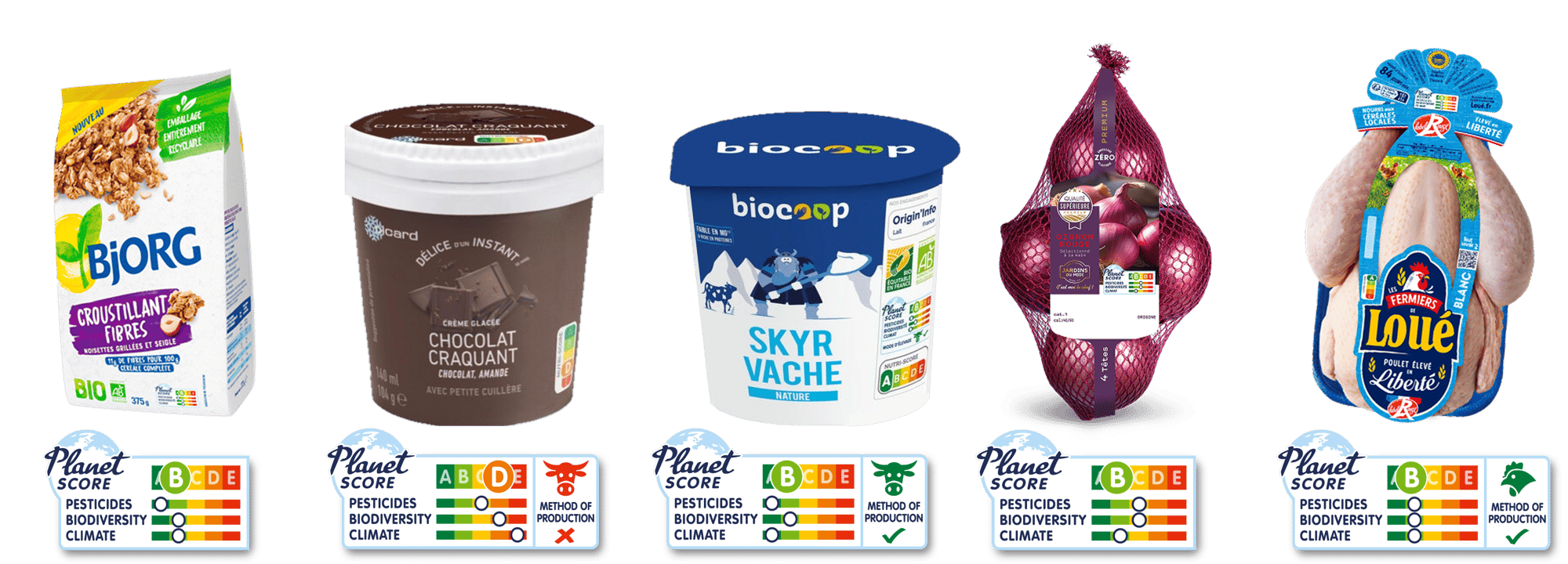
Planet-score environmental rating displayed on a food product

Trusted by consumers

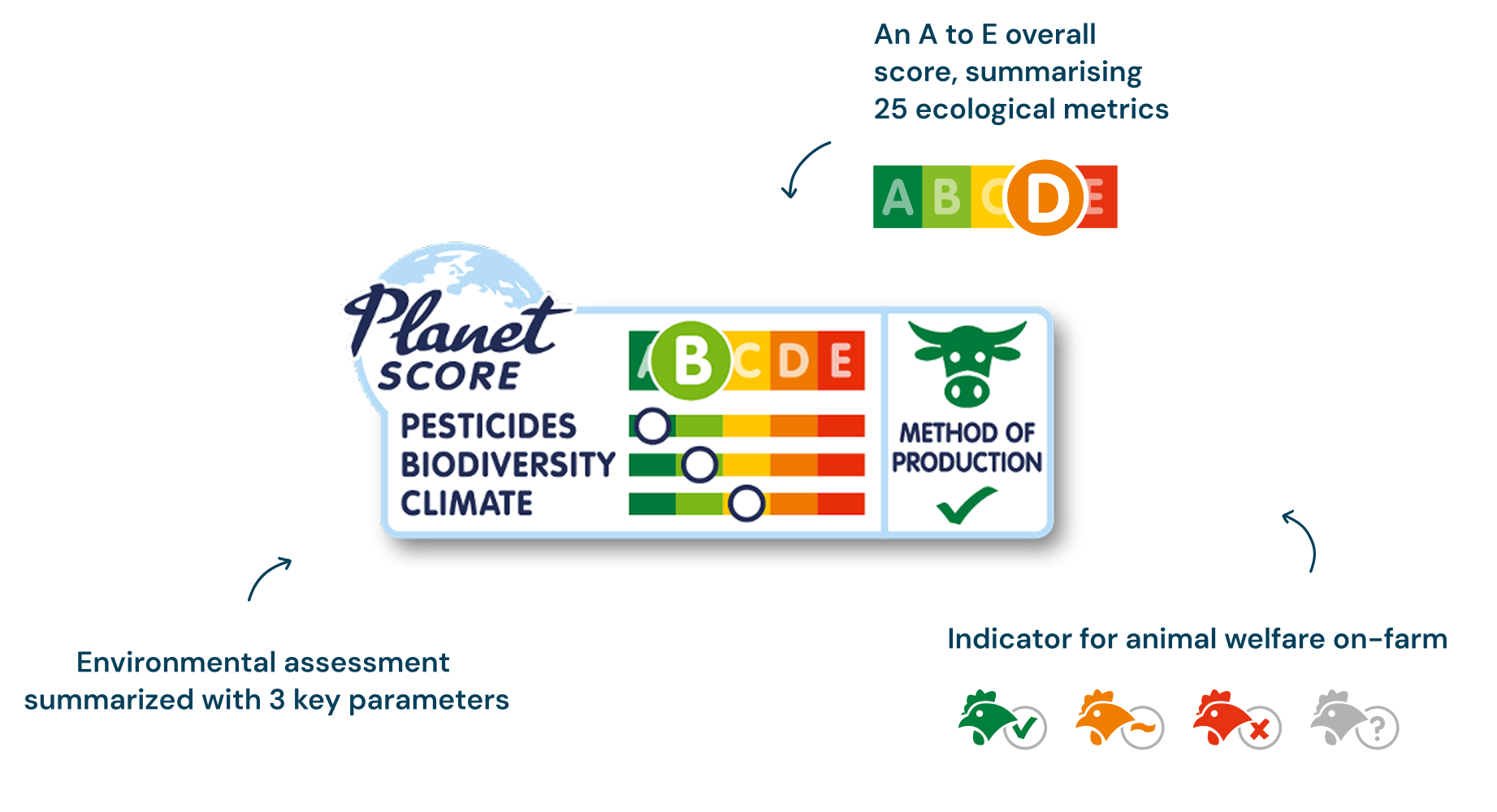
Planet-score is a comprehensive, yet simple, colour-coded label that is easy to understand and provides valuable information for both consumers and companies. It highlights key criteria and the main environmental issues related to food: pesticides, biodiversity, climate impact and rearing methods.

Beyond Carbon Accounting

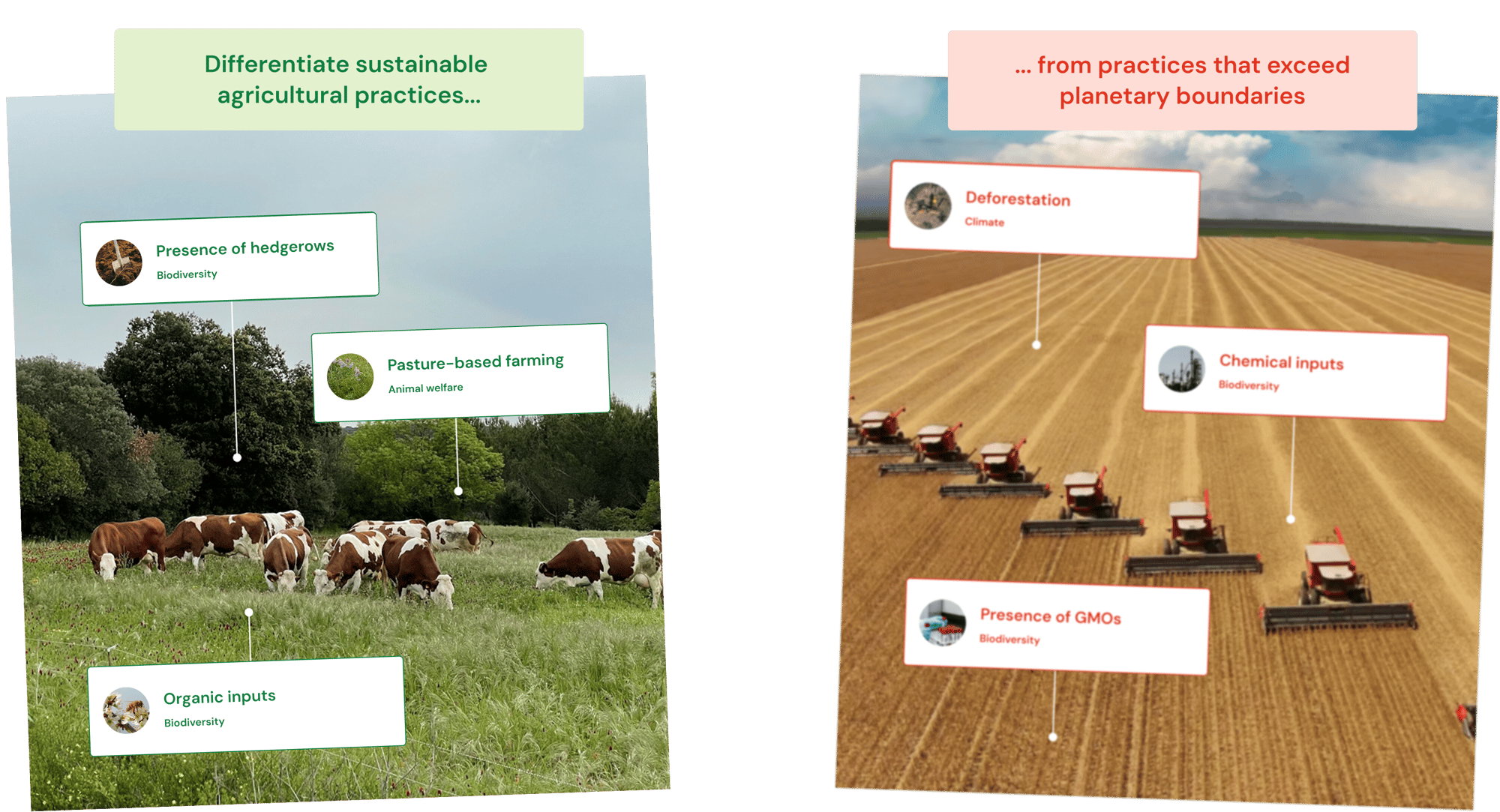
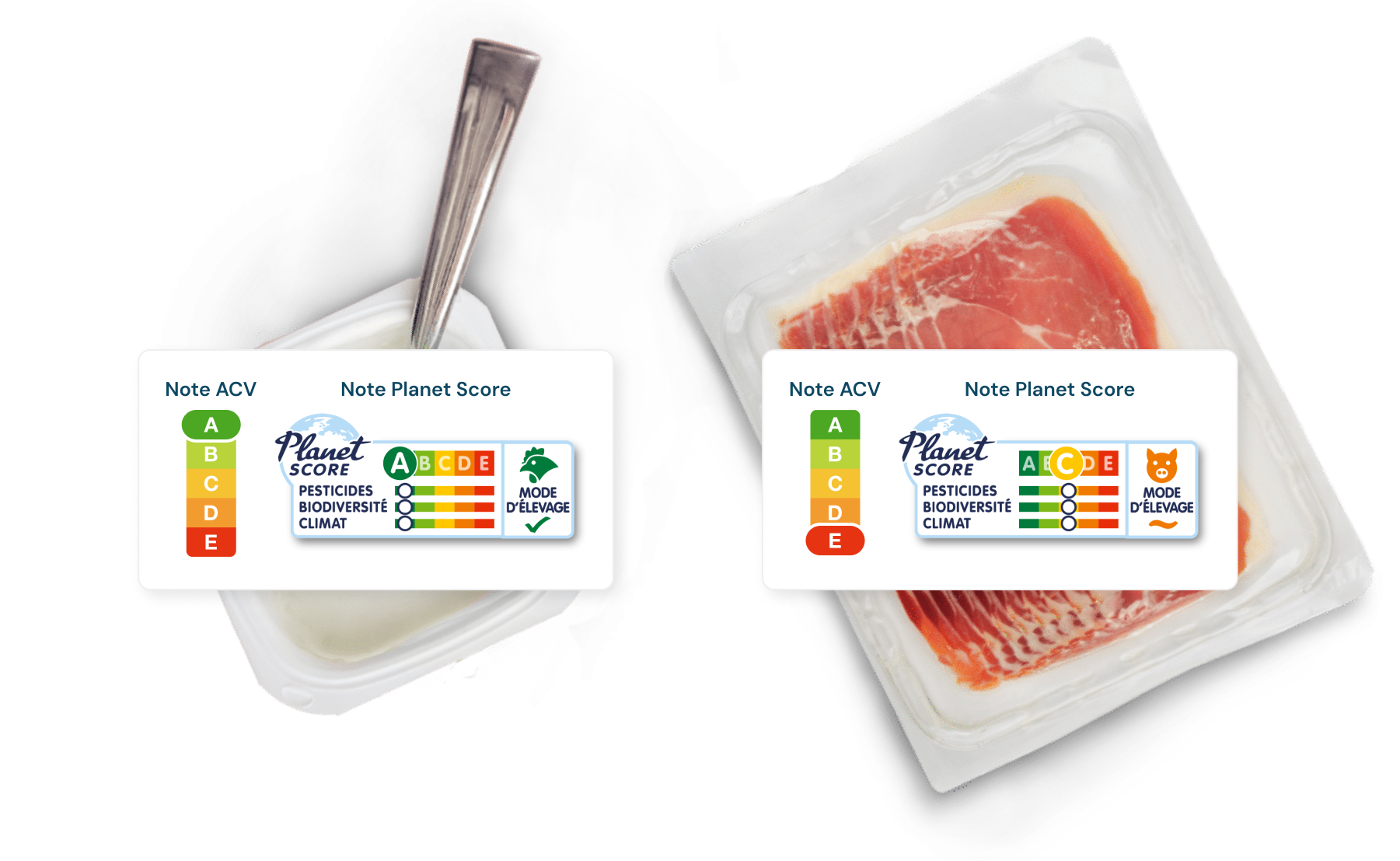
Carbon accounting is all the rage, but focusing only on carbon can harm other environmental priorities, like biodiversity. LCA methods for living and renewable systems have serious flaws. Planet-score corrects these and delivers a true ecological assessment through clear, key indicators.

A product-focused approach, with details down to the farm level

While designed primarily to evaluate products, Planet-score can provide different levels of analysis. It can be used to assess dishes, menus, production methods, farms, growing systems, or entire sectors.

Trusted by Consumers

The Label People Prefer

Because of its intuitive and educational aspect, Planet-score is the label widely preferred by consumers in all the studies carried out (UFC-Que Choisir...)


The Label People Know

xial interests involved in its governance.

Beyond the label, a movement for change

Planet-score is driving the ecological transition of our food systems. More than just a tool, it provides a common language for agri-food stakeholders, making a sustainable future both desirable and achievablehelping to measure, improve, and inform with an unbiased indicator.
By
committing to Planet-score, you join a growing movement that is shaping the future of food.

 
Planet-score approach for transparent environmental food labelling

Join the food transparency movement

135K+
analyzed and rated products
330+
committed brands
12
Countries
Planet-score approach for transparent environmental food labelling bjorg picard biocoop loue jardin du midi

300 marques nous font confiance

Gerblé
Bjorg
Vrai
omie & cie
Ninkasi
Danival
Naturalia
Blédina
Les 2 vaches
Autour du riz
greenweez
Hipp
Karma
Monoprix
Bonneterre
D'aucy
Franprix
Nestlé
Carrefour
Loué
a

We go beyond Carbon Accounting

Carbon accounting is all the rage but it poses three problems. 

  • As a consumer you need to be able to value farming systems within the same category – carrot versus carrot. This will help you choose the best carrot. LCA methodologies will not give you results with this type of precision. 
  • Second there are serious problems in the LCA methodologies and parameters used to evaluate carbon footprint in living or renewable systems, such as textiles and food. 
  • Third and most important is the problem of carbon tunnel vision: looking at carbon only, independently of other key environmental concerns, can lead to outcomes that are NOT better for the environment.This can be detrimental to biodiversity, for example.

Planet Score adjusts for methodological flaws and gives a real ecological value under key and easily recognised headings. 


En savoir plus